
Colt Commander
$400.00
| Feature | Historical information |
|---|---|
| Manufacturer | Colt’s Manufacturing Company |
| Model | Colt Commander |
| Introduction | 1949 |
| Commercial introduction | 1950 |
| Design family | Colt 1911 |
| Firearm type | Semi-automatic pistol |
| Historical frame material | Aluminum alloy on original lightweight models |
| Country of manufacture | United States |
Description
Colt Commander
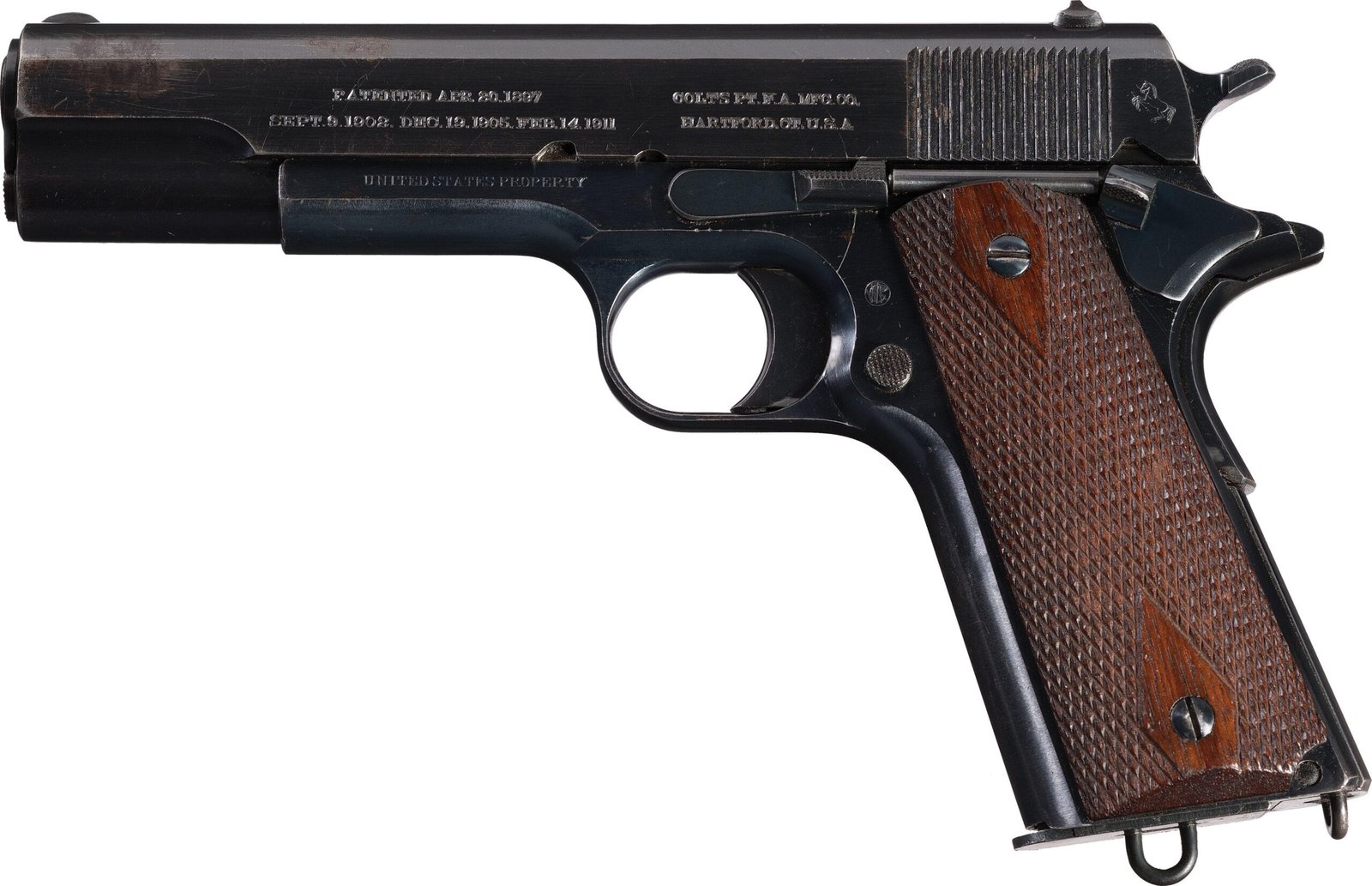
The Colt Commander is a historically recognized model in the development of American semi-automatic pistols. Introduced in the mid-twentieth century, it became known for its shorter overall design compared with the traditional Colt Government Model.
The Commander represents an important chapter in Colt’s manufacturing history and demonstrates how established firearm designs evolved to meet changing preferences. Its connection to the famous 1911 platform has also made it a recognizable subject in firearms history.
1. History of the Colt Commander
The Colt Commander was introduced in 1949. It was developed as a more compact variation of the established 1911-style pistol.
The model was initially associated with a lightweight aluminum-alloy frame, distinguishing it from earlier all-steel Government Model designs.
In 1950, Colt introduced the commercially available Commander. Over subsequent decades, the company developed additional variations, including models with different frame materials and exterior finishes.
The Commander name has remained part of Colt’s historical product lineup for generations.
2. Manufacturer Background
The Colt Commander was developed by Colt’s Manufacturing Company, an American manufacturer with a long history of producing revolvers and semi-automatic pistols.
Colt’s work in firearm engineering helped shape several important developments in American manufacturing. The Commander became another recognized addition to the company’s extensive 1911-related product history.
3. Design and Engineering Background
The Colt Commander follows the historical 1911 design tradition while representing a more compact variation of the Government Model.
Its development reflected an interest in adapting an established design into a different physical format.
Historically, Commander models appeared in different materials and finishes. These variations illustrate how Colt adapted the platform during different manufacturing periods.
The Commander is also frequently discussed alongside other 1911-family models when examining the evolution of American semi-automatic pistol design.
4. Historical Product Information
| Feature | Historical information |
|---|---|
| Manufacturer | Colt’s Manufacturing Company |
| Model | Colt Commander |
| Introduction | 1949 |
| Commercial introduction | 1950 |
| Design family | Colt 1911 |
| Firearm type | Semi-automatic pistol |
| Historical frame material | Aluminum alloy on original lightweight models |
| Country of manufacture | United States |
Features and specifications differ among Commander versions and production years.
5. Manufacturing Heritage
The Commander represents an important period in Colt’s postwar manufacturing history.
Its introduction demonstrated how a well-established firearm design could be adapted into a different configuration without losing its recognizable identity.
The use of different frame materials across Commander variations also reflects the evolution of manufacturing methods and material choices throughout the twentieth century.
6. Historical Significance
The Colt Commander holds an important place in the history of the 1911 platform. Its introduction in 1949 expanded the range of Colt’s established pistol designs.
It is frequently included in historical discussions about the development of compact 1911-pattern pistols and the evolution of American firearm manufacturing.
Its continued recognition reflects the lasting influence of the original Colt 1911 design.
7. Conclusion
The Colt Commander is a significant part of Colt’s manufacturing heritage. Introduced in 1949, it represents an important development in the history of the 1911 platform. Its distinctive place in Colt’s product history and its connection to twentieth-century American firearm engineering make it an interesting subject for historical research.
Related products
-
Ruger Super Redhawk
$600.00 -
Ruger Mark IV
$400.00 -
Colt King Cobra
$300.00
Reviews
There are no reviews yet.