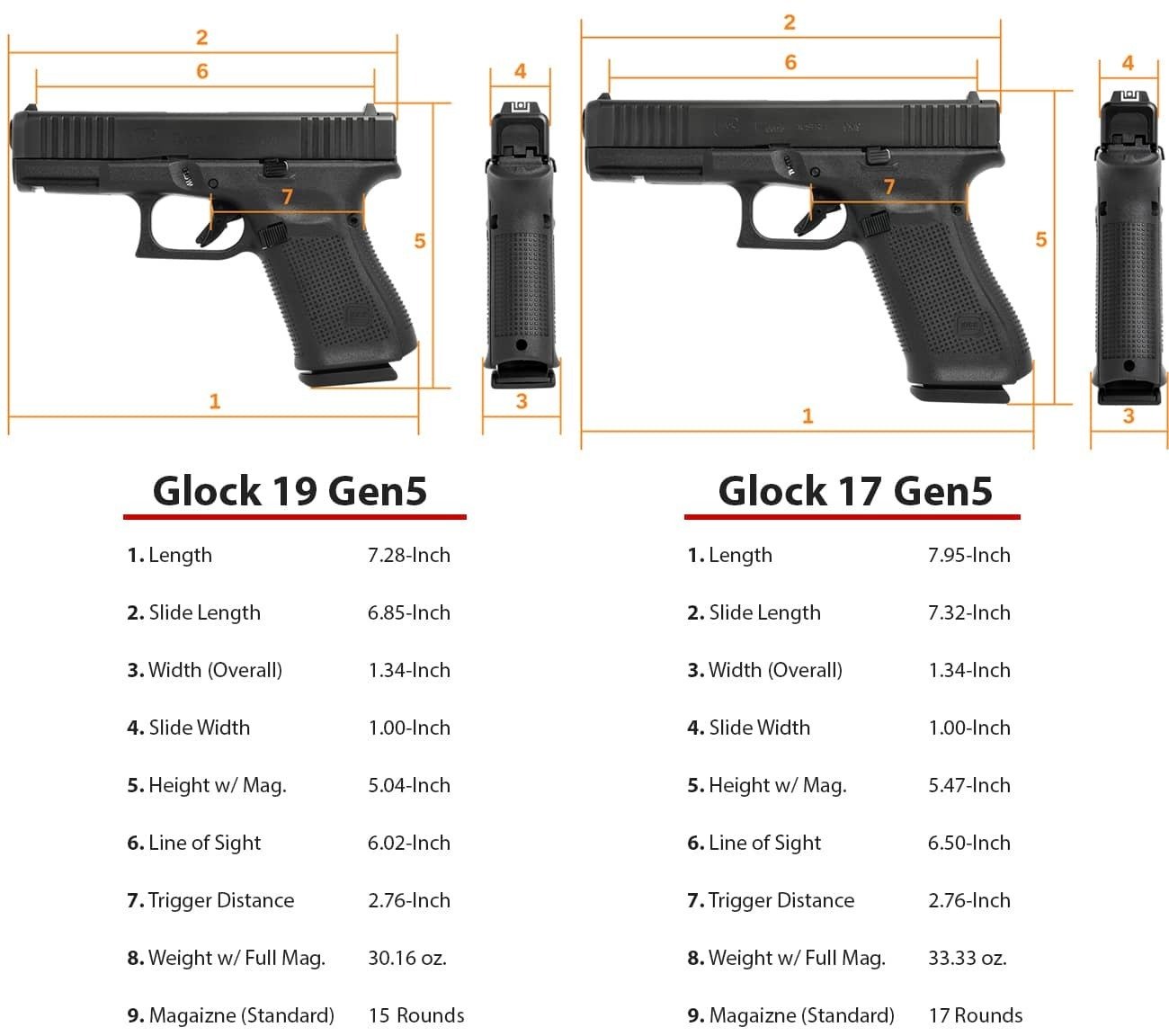
Glock Gen 3 vs Gen 4 vs Gen 5
Glock Gen 3 vs Gen 4 vs Gen 5
Glock Gen 3, Gen 4, and Gen 5 pistols are best understood as successive design generations within a broad product family, not as three wholly separate types of firearm. Each generation includes multiple models, from compact options to full-size pistols, and a shared generation label does not guarantee identical features. Specifications may differ according to model, caliber, production year, and the market where a pistol was sold. As a result, generation comparisons are useful for orientation, but they cannot replace checking the details of a particular firearm.
Gen 3 is widely recognized for its established, relatively straightforward layout. Its familiar frame and controls have helped make it a common point of comparison, though dimensions and features still vary across models. Gen 4 introduced more adaptable ergonomics, including interchangeable backstraps on many models, as well as a revised recoil assembly. These changes offered users additional ways to adjust grip fit and represented a significant update while retaining the general design lineage. Individual configurations and availability can depend on the specific model and market.
Gen 5 brought broader updates to the frame and controls, with changes intended to refine handling and usability. The precise combination of features is not universal across every model, and some details have evolved over time. There is no single generation that is best for every buyer or purpose. A useful comparison considers intended use, hand fit, preferred controls, parts or accessory availability, and applicable local regulations. Before making a decision, readers should verify the specifications of the exact model and caliber under consideration, including any differences tied to its production date or regional configuration. Comparing the actual options side by side is more reliable than assuming that every pistol bearing the same generation number will share an identical setup.
Frame shape and control layout are among the most noticeable differences when comparing Glock generations. Gen 3 pistols have molded finger grooves on the front of the grip, intended to guide finger placement, and a generally fixed grip configuration. The magazine release is positioned for right-handed operation and is not reversible. This arrangement may feel natural to some users, while others may find that the grooves do not line up comfortably with their fingers or preferred grip.
Gen 4 introduced a more textured grip surface and interchangeable backstraps, allowing the grip circumference and fit to be adjusted to some extent. Its magazine release can be reversed, which may make operation more convenient for left-handed users. These changes give Gen 4 owners additional options for tailoring the interface without changing the pistol’s basic frame design. The best configuration depends on how the grip fills the hand and whether the controls can be reached and operated comfortably.
Gen 5 removes the molded finger grooves, offering a smoother front strap that may accommodate a wider range of hand shapes and finger placements. Updated grip and frame details distinguish the generation, and applicable models include ambidextrous slide-stop controls. Front serrations are present on many Gen 5 models, but not all, so features should be checked on the specific variant rather than assumed from the generation alone. Across all three generations, hand size, control reach, and personal comfort matter more than a model’s reputation or a feature list. Where possible, handle the exact model before choosing; any live-fire evaluation should take place in a suitable setting with proper safety procedures and qualified supervision. A careful comparison can help identify which grip and controls feel manageable without treating any generation as universally best.
Comparing Glock generations requires attention to the specific model, because a generation label does not mean every pistol has identical components or features. The Gen 3 design established a familiar baseline, while Gen 4 introduced several notable updates. Among them was a dual recoil-spring assembly, intended to refine the cycling system. Gen 4 models also added interchangeable backstraps on many variants, allowing users to adjust grip size. These changes affected the platform’s design, but their presence and details should be checked against the particular model being considered.
Gen 5 brought further revisions to selected internal parts and external features. Its changes include updates to the barrel design, marketed by Glock as the Glock Marksman Barrel, as well as other refinements to the platform. Gen 5 also features an updated surface finish. Many models have a flared magazine well, which can make magazine insertion feel different, although that feature is not universal across all Gen 5 variants. Other details, such as controls, dimensions, and component specifications, can vary by model and configuration. It is therefore more accurate to compare individual pistols than to assume that every firearm within a generation shares every update.
In practical terms, these design differences may influence how a pistol feels in the hand, what maintenance questions arise, or which features a buyer prefers. A revised barrel, recoil system, finish, or magazine well can be relevant when evaluating a specific firearm, but design changes alone do not establish that one generation will be more accurate or reliable for every user. Results can depend on the model, ammunition, condition, maintenance, and individual fit. Anyone assessing compatibility, service needs, or technical specifications should consult the manufacturer’s documentation for the exact model and seek guidance from a qualified professional when appropriate. This model-specific approach provides a more useful comparison than relying on broad claims about an entire generation.
Choosing among Glock Gen 3, Gen 4, and Gen 5 is less a matter of identifying a universally superior generation than matching a particular model to your priorities. Gen 3 may suit buyers who prefer a familiar, widely established design and value broad aftermarket familiarity. Gen 4 adds interchangeable backstraps for adjusting grip size and a reversible magazine release, features that can matter when adapting the pistol to different hands or operating preferences. Gen 5 removes the front-strap finger grooves and introduces other frame and control updates, which some users may find more comfortable or convenient.
Handle the exact model you are considering whenever possible. Differences in hand size, grip preference, reach to controls, and perceived balance can outweigh a generation’s reputation or feature list. A newer version is not automatically a better fit, and a familiar design may be preferable if it feels secure and allows comfortable access to controls. Where lawful, seek qualified instruction and follow safe handling practices during any evaluation.
Compare the full ownership picture as well as the generation. Purchase price, condition, included accessories, warranty coverage, and the availability of local parts and qualified service can affect long-term value. A well-maintained example with dependable support may be a more practical choice than a less suitable model selected solely for newer features. Verify warranty terms and the firearm’s condition with an appropriate, reputable seller before making a decision.
Do not assume magazines or other components interchange simply because they look similar. Compatibility can vary by generation, model, and configuration, and an incorrect part may not fit or function safely. Check Glock documentation for the specific firearm and component, or consult a qualified gunsmith before installing or relying on parts. Follow all firearm safety practices, store firearms securely, and comply with applicable laws governing purchase, possession, transport, and modification. These checks make the choice more informed than generation labels alone.