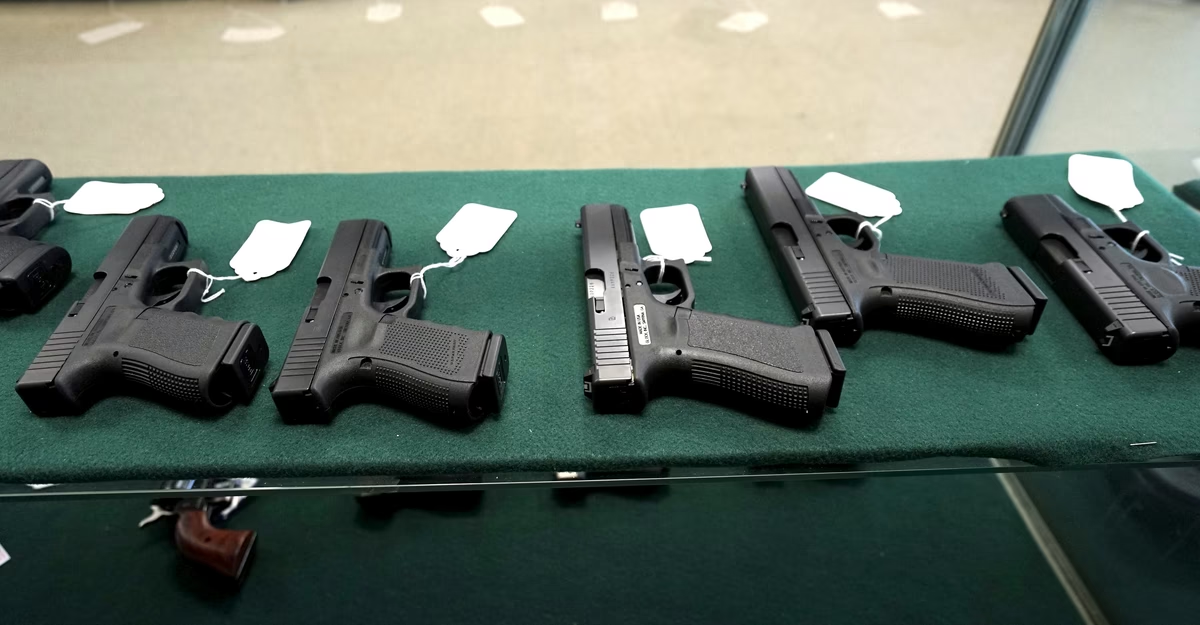
Glock V Series Explained: What’s New in the 17 V, 19 V, and 45 V?
The Glock 17 V, Glock 19 V, and Glock 45 V are related entries in Glock’s full-size and compact handgun lineup. Their shared naming and design heritage make them easy to discuss together, but the model numbers still refer to distinct configurations. The 17 is generally associated with a full-size frame and slide, the 19 with a more compact format, and the 45 with a compact-length slide paired with a full-size grip. These broad categories provide useful context, not a substitute for checking the specifications of a particular V-series model.
The letter “V” should be treated as part of the model designation, rather than as proof that every pistol bearing it has identical equipment or represents a particular change. Glock configurations may differ across markets, production periods, and product packages. Details such as slide features, sight arrangements, included accessories, and compatibility should therefore be confirmed using current manufacturer materials and the exact model information supplied by an authorized seller. Earlier Glock generations can offer helpful background, but they do not establish the specifications of a newer variant.
This guide separates confirmed information from conclusions drawn by analogy. It will outline what is documented about the Glock 17 V, 19 V, and 45 V, clarify how their formats differ, and identify areas where regional or date-related variation may matter. That distinction is important because product descriptions, retailer listings, and informal reports do not always use model names or configuration details consistently.
For prospective owners, the practical takeaway is to verify the current listing before comparing models or making a purchase decision. Consult Glock’s official product information for the relevant country, confirm the precise designation and included configuration, and ask the seller to resolve any discrepancies. The following comparison focuses on the differences that can be established, while avoiding assumptions that may not apply to every market or production batch.
Glock’s use of “V” in the names Glock 17 V, Glock 19 V, and Glock 45 V identifies a labeled model variant in current product materials. Unless Glock explicitly defines the letter as a generation designation for the relevant market, it should not be treated as proof that these pistols belong to a new numbered generation. The designation alone does not establish which components changed, or whether a change applies to every version sold worldwide.
To compare the three pistols, check the manufacturer’s specification page and the exact product listing for the country and configuration being considered. Similar model names do not guarantee identical equipment. A feature described for one V model, or shown in a photograph, should not automatically be attributed to the other two. Retail listings can also combine manufacturer specifications with dealer-installed accessories, so the package contents merit separate confirmation.
Factory features should be distinguished from options. Optic-ready slides, mounting plates, night sights, and particular sight sets may depend on the specific configuration or market; “V” by itself is not enough to establish that an optic cut or a particular sight is standard. Likewise, do not assume revised controls, a changed frame, or a different finish unless the applicable Glock materials identify that feature. Accessories pictured with a pistol may be illustrative rather than included.
Packaging and availability can vary by region, distributor, and sales package, even when the underlying model designation is the same. Buyers should verify the SKU, listed sights, optic provisions, included backstraps or other accessories, and finish against the local manufacturer documentation before comparing prices. This approach keeps the V label in perspective: it helps identify a marketed variant, while the published specification for the exact model and market determines which shared updates—and which configuration-specific features—are actually present.
The Glock 17 V occupies the full-size position in the V lineup. Compared with the more compact Glock 19 V and crossover Glock 45 V, its longer grip and slide provide the dimensions associated with a duty-size pistol. Published specifications list a 9×19 mm chambering, a 4.49-inch barrel, an overall length of about 7.95 inches, and a standard magazine capacity of 17 rounds. Exact dimensions and included accessories should be checked against the manufacturer’s current regional listing, since package details can vary.
Relative to the closest earlier Glock 17 variant, the Gen5, the 17 V retains the familiar full-size format and core capacity rather than representing a change in class. The V designation identifies a newer variant, but it should not be taken by itself as proof of a particular mechanical or performance improvement. Buyers comparing models should consult the official specification sheet for the specific 17 V configuration and note any stated differences in sights, slide preparation, controls, or supplied magazines.
In handling terms, a full-length grip can offer space for a full hand and a 17-round magazine, while the longer slide gives the pistol a larger overall footprint than compact alternatives. Those dimensions may be relevant for people who prioritize a full-size service-format handgun, have suitable storage, or are considering a model for lawful range use or an authorized professional role. The larger profile can also make concealed carry less convenient for some users; fit, training, local laws, and safe storage all matter.
Factory equipment depends on the exact version sold. Some Glock configurations are offered with optics-ready slide options, while standard models may differ in sighting equipment and accessories. Confirm whether the particular 17 V includes an optic interface, which sights are fitted, and what comes in the box before purchase. These details are more useful for comparison than assumptions based solely on the model name. The full-size design is one option among several, not a universally better choice; intended use, handling preferences, and applicable legal requirements should guide evaluation.
Glock 19 V: The Compact Middle Ground
The Glock 19 V retains the familiar compact format: a 4.02-inch barrel, an overall length of about 7.36 inches, and a standard magazine capacity of 15 rounds. Its grip is shorter than the full-size Glock 17 V’s, while its slide and overall proportions remain shorter than those of the Glock 45 V crossover model. These dimensions place the 19 V between a full-size pistol and a crossover configuration in practical handling terms, though the models serve different preferences rather than forming a strict size ladder.
Compared with the preceding Glock 19 generation, the V version’s defining update is its factory optic-ready slide configuration. That makes it easier to mount a compatible red-dot sight than on a standard slide that lacks an optic cut. The basic compact footprint and 15-round standard capacity remain familiar; the V designation does not, by itself, indicate a larger frame or a higher-capacity magazine. Buyers should confirm the exact sight-cut and included components for the specific market and package, as availability can vary.
Where features are shared across the V-series models, the most relevant point is a more consistent, optics-oriented factory setup, while the 19 V preserves the dimensions that have made the compact model widely adaptable. It offers a balance: a grip that accommodates a useful number of rounds without the longer handle of a full-size model, and a shorter overall profile than the 45 V. This can suit users seeking a compromise between ease of handling and a substantial grip, but neither description guarantees a particular fit.
Hand size, preferred grip, holster choice, and intended use all affect whether the compact frame feels comfortable and controllable. If possible, handle or safely test the models before choosing. Magazine capacity and other requirements are also subject to local laws, so verify applicable rules before purchase or transport.
The Glock 45 V retains the crossover design that defines the G45: a compact-length slide sits on a full-size frame and grip. GLOCK’s published specifications for the G45 list a 4.02-inch barrel, 7.44-inch overall length, 5.47-inch height, and a standard magazine capacity of 17 rounds. These dimensions describe a pistol with a shorter slide than the G17, but a full-length grip rather than the shorter grip of the G19.
The V version’s distinguishing update is its factory optic-ready configuration, which is intended to accommodate a compatible red-dot sight. Buyers should check the specific GLOCK listing for details on the included optic or mounting arrangement, since package contents and availability can vary by market. The core crossover proportions remain the defining feature; the V designation does not turn the G45 into a G19 or G17.
The G45 V shares its compact-slide format with the G19 V, while its full-size grip is closer in length and capacity to the G17 V. That comparison is useful, but the models are not interchangeable: their frames, slides, and overall dimensions differ. In particular, the G45 V’s grip can provide more room for the hand than the G19 V’s compact grip, while its slide is shorter than the G17 V’s full-size slide.
This layout involves practical trade-offs. The full-size grip can support a secure hold and accommodate a standard 17-round magazine, but its length creates a larger grip footprint and may be more noticeable when concealed. The shorter slide reduces the front-to-back length compared with a G17, though it does not make the pistol as compact overall as a G19 because the grip remains full size. The G45 V therefore suits users seeking a compact-slide, full-grip balance, rather than either model’s complete configuration.
The clearest way to compare the Glock 17 V, 19 V, and 45 V is to look at their frame and slide proportions first. The 17 V is the full-size option, the 19 V is the more compact model, and the 45 V pairs a compact-length slide with a full-size grip. That distinction affects overall dimensions and handling, while also helping explain their different standard magazine capacities.
The 17 V has the longest slide and barrel of the three. Its full-size grip accommodates a standard magazine listed at 17 rounds in common configurations. The 19 V has a shorter slide and barrel, a shorter grip, and a commonly listed standard capacity of 15 rounds. The 45 V uses a slide and barrel length close to the compact 19 V, but its full-size grip generally accepts a 17-round standard magazine. These figures describe common configurations; they are not universal across markets.
For dimensional comparisons, consult the current official product sheets for each exact variant. Glock’s published measurements can include overall length, barrel length, height, and width, but listings may differ by generation, model configuration, or measurement convention. Regional rules can also affect magazine capacity, and some jurisdictions require restricted-capacity magazines. Confirm the specifications for the specific product code and market rather than assuming that figures from another version apply.
Factory equipment may likewise vary. Depending on the precise model and market, features such as the sight set, optic-ready slide, front serrations, accessory rail, or included magazine configuration can differ. Do not infer a feature from the model name alone; check the manufacturer’s current documentation or ask an authorized dealer to verify what is included. In practical terms, the 17 V emphasizes a full-size format, the 19 V a compact format, and the 45 V a full-size grip beneath a compact slide. Official, region-specific product sheets provide the most reliable basis for comparing exact measurements and factory features.
Shared family names and similar dimensions are useful starting points, but they do not establish that accessories will fit across Glock 17 V, Glock 19 V, and Glock 45 V configurations. Differences in frame size, slide profile, controls, rail dimensions, magazine design, or production changes can affect fit. Even when two pistols appear closely related, compatibility should be confirmed for the exact model and configuration rather than inferred from appearance or a broad product description.
Check each accessory category separately. Magazine fit and function may depend on the specific frame and magazine generation, while holster fit can be affected by slide length, mounted lights, optics, and other equipment. Sights and optic-related components also vary by slide and factory configuration; a model name alone may not indicate whether a particular pistol has an optic-ready cut or which pattern it uses. Other accessories, including lights and replacement parts, may have their own model-specific requirements. A listing that says “Glock compatible” may not identify every relevant distinction.
When comparing products, begin with the complete model designation and the pistol’s actual configuration, including any factory-installed features. Then verify the accessory maker’s stated fit information and distinguish factory-supported features from aftermarket products. Aftermarket availability does not necessarily mean that an item is approved or supported by the manufacturer, and product fit claims can be limited to particular generations or setups. Consult current Glock documentation and, when details remain uncertain, ask a qualified retailer or armorer before purchasing. This check can help avoid unsuitable purchases and prevent assumptions about fit or function. Do not rely solely on a shared family name, online photographs, or another owner’s experience; confirm the specific combination of pistol and accessory with authoritative product information.
Choosing among the Glock 17 V, 19 V, and 45 V begins with understanding their broad size differences, not assuming one model is universally best. The 17 V has full-size dimensions, the 19 V uses a more compact overall format, and the 45 V combines a full-size grip with a shorter slide. These distinctions can affect how each feels and fits a person’s lawful intended use, but they do not replace individual assessment or qualified instruction.
Consider where and how a firearm would be lawfully used, as well as applicable local requirements. A full-size format may suit priorities that favor a longer overall profile, while a compact format may be preferable when a smaller overall footprint matters. The 45 V offers a different balance: its grip is full-size, although its slide is shorter. These are general characteristics, not guarantees of comfort, performance, or suitability for any particular person.
Fit is personal, so if lawful and available, handle unloaded examples at a reputable range or retailer under appropriate supervision. Notice whether the grip feels comfortable, whether you can reach controls without strain, and whether the overall dimensions feel manageable. Ask a qualified instructor to explain safe handling and help you assess fit. Do not handle or inspect a firearm without confirming it is unloaded and following the facility’s safety procedures.
Also weigh access to reliable training, secure storage, and the time and resources needed for ongoing practice. Safe storage should prevent unauthorized access and comply with applicable laws. Before making any decision, verify current regulations and consider speaking with a qualified, safety-focused professional. This guide is informational, not a recommendation for a particular person. The most appropriate choice depends on lawful purpose, individual comfort, training, and responsible storage—not simply on a model’s dimensions or popularity.
The Glock 17 V, Glock 19 V, and Glock 45 V are distinguished primarily by their frame and slide dimensions. The 17 is the full-size option, with a longer slide and grip; the 19 pairs a shorter slide with a compact grip; and the 45 combines a compact-length slide with a full-size grip. These broad differences affect overall dimensions and how each model may fit a person’s preferences, but they do not establish that one is universally preferable. Specific features associated with a “V” designation should be checked against the exact model and market, rather than assumed to be identical across regions.
Availability, release timing, configurations, and prices can change. Specifications may also differ by country, state, or individual product version, so general descriptions should not replace current manufacturer information. Before making a decision, consult Glock’s official materials and verify the exact configuration with an authorized seller. Confirm details such as dimensions, included components, and local availability directly; listings and announcements may become outdated, and similarly named products can have market-specific differences.
Safe ownership requires more than comparing model features. Handle any firearm as if it is loaded, keep the muzzle pointed in a safe direction, and keep your finger outside the trigger guard until you are ready to fire at an appropriate target. Store firearms securely, inaccessible to unauthorized people, and separate from ammunition where required or appropriate. Follow all applicable laws governing purchase, possession, transport, storage, and use. Anyone unfamiliar with safe operation should seek hands-on instruction from a qualified professional and review the manufacturer’s manual before handling the firearm. Taken together, the 17 V, 19 V, and 45 V offer different size combinations, while current local specifications and responsible practices should guide any further research or ownership decision.