
A Beginner’s Guide to Firearm Safety and Responsible Ownership
Begin with a Safety Mindset
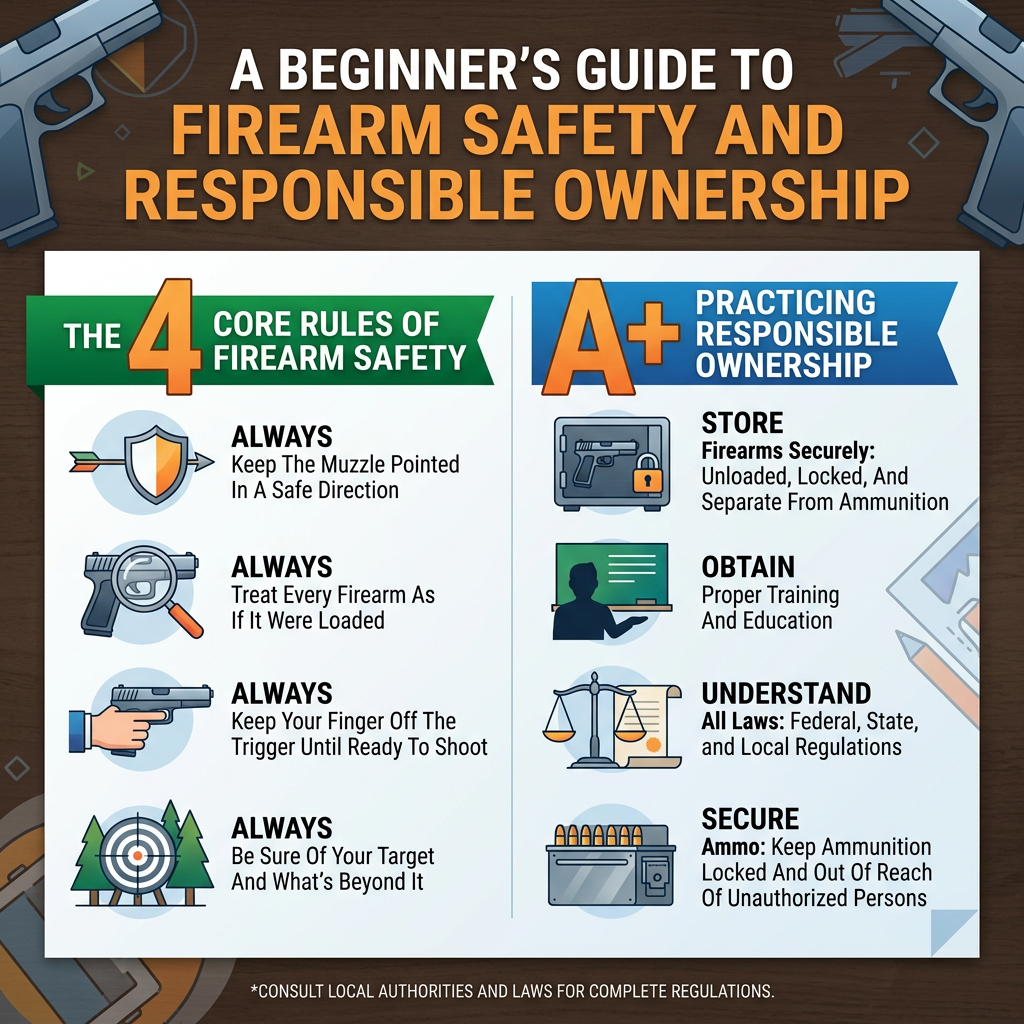
Responsible firearm ownership starts with treating every firearm as if it is loaded, even when you believe it is not. Keep the muzzle pointed in a direction where an unintended discharge could not injure anyone, and keep your finger outside the trigger guard until you are prepared to fire at a clearly identified target. Be certain of your target and what lies beyond it. These habits should be followed consistently, not only at a range.
If you are new to firearms, do not rely on guesswork or informal advice. Take an in-person safety course with a qualified instructor. Learn the specific operation and safe handling procedures for your firearm, and consult its manufacturer’s manual. If you are uncertain about its condition or operation, stop and ask a knowledgeable professional rather than experimenting.
Store Firearms Securely
When a firearm is not in use, store it locked and inaccessible to unauthorized people. A secure safe or lockbox can help prevent access by children, visitors, and anyone who should not handle it. Consider using a quality locking device as an additional layer of protection, following the manufacturer’s instructions. Keep keys and access codes private, and review your storage arrangements as household circumstances change.
Ask local authorities or a qualified safety instructor about laws governing storage, transport, and permitted use in your area. Requirements vary, and owners are responsible for understanding and following them.
Know When Not to Handle One
Never handle or use a firearm while impaired by alcohol, drugs, fatigue, or strong emotional distress. If a situation feels unsafe, put distance between yourself and the firearm and seek help from a trusted person or appropriate professional. Firearms should never be used to settle an argument or intimidate someone.
Make Responsibility a Routine
Safe ownership is an ongoing commitment. Keep learning, inspect and maintain equipment according to its manual, and practice only in lawful, supervised settings. Talk with everyone in your household about safety and what to do if they encounter an unsecured firearm: do not touch it, leave the area, and tell a responsible adult. Careful habits protect you and the people around you.