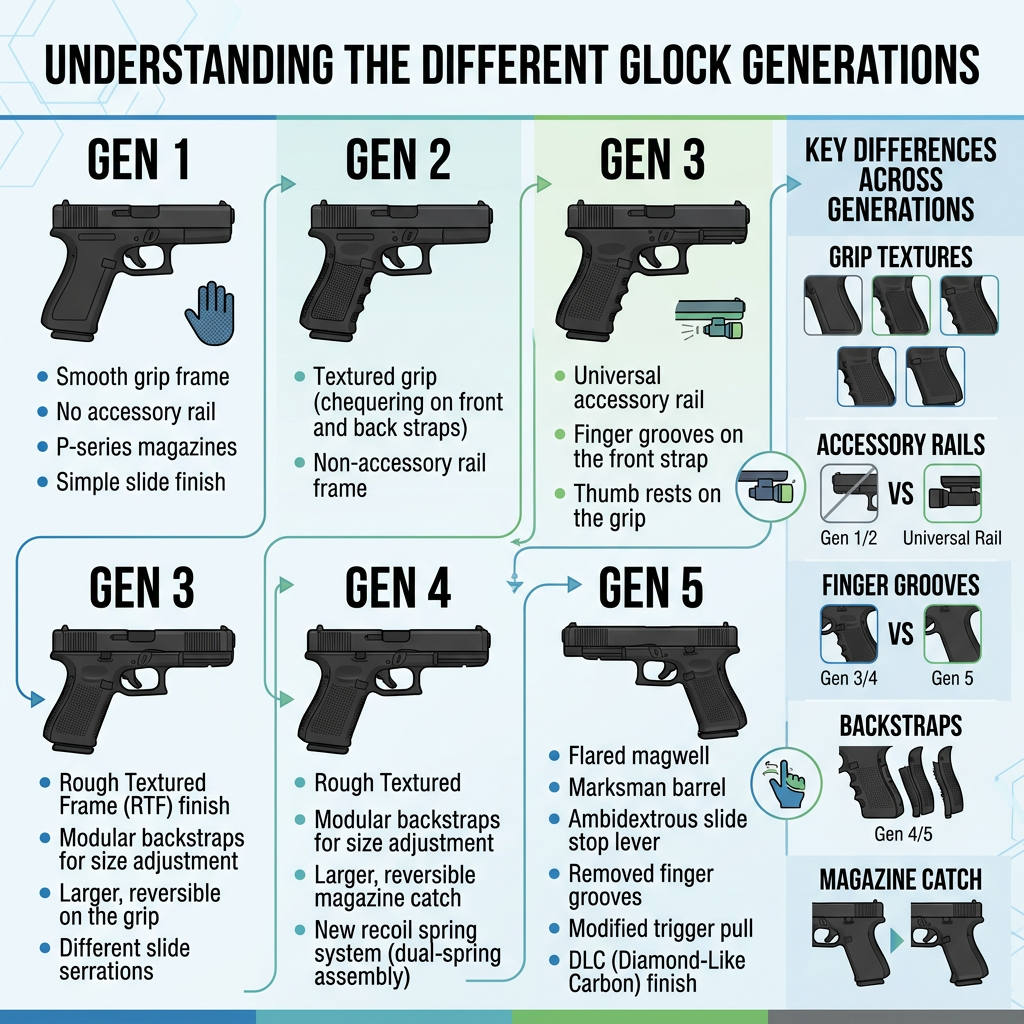
Understanding the Different Glock Generations
What a Glock Generation Represents
Understanding the Different Glock Generations Glock pistols are often grouped into generations, with each label describing a broad stage in the design’s development. A generation is not always a complete redesign: changes may involve the frame, grip texture, controls, or compatibility with accessories. Features can also vary by model and market, so a generation number alone does not identify every detail of a particular pistol.
Understanding these distinctions helps readers compare models and interpret product descriptions. It is also useful to check the exact model designation and manufacturer information rather than assuming every pistol introduced in the same period received identical updates.
From Early Designs to Gen 3
The first-generation models established the familiar polymer-frame, striker-fired format. Their relatively simple frame treatment and grip design reflected the priorities of an early service pistol: durability, straightforward handling, and a consistent operating system.
Later, the second generation introduced changes to the grip surface and frame. The third generation became especially recognizable for its molded finger grooves and accessory rail on many models. These updates provided a more defined gripping surface and made it easier to attach compatible equipment. However, preferences differ; some shooters find the grooves comfortable, while others prefer a less contoured grip.
Gen 4 and Gen 5 Changes
Generation 4 brought a revised grip texture and interchangeable backstraps on many models, allowing users to adjust the fit. It also incorporated other design refinements, which may differ among pistol sizes and versions.
Generation 5 introduced a further set of updates. Commonly noted features include a revised grip without finger grooves on many models, an ambidextrous slide stop, and changes to internal components. Certain models also include a flared magazine well or other features, but specifications are not universal across the lineup.
Choosing What to Compare
When comparing generations, consider fit, intended use, model size, and the availability of compatible parts. Review official specifications and consult a qualified firearms professional for questions about safe handling or local requirements. Generational labels offer a helpful overview, but the individual model’s features ultimately matter most.